How is PCAB different from other licenses?
PCAB Accreditation is separate from routine pharmacy licensure. A license generally confirms legal authority to operate under state requirements, while PCAB focuses on quality practices for pharmacy compounding. Accreditation preparation usually requires organized policies, documented procedures, staff competency records, quality activities, corrective actions, and evidence showing that compounding operations follow applicable standards consistently over time.
PCAB is not an FDA license or an FDA accreditation program. PCAB refers to the Pharmacy Compounding Accreditation Board, now associated with compounding accreditation through ACHC. The FDA regulates aspects of drug manufacturing and compounding under federal law, while PCAB-style accreditation evaluates compounding pharmacy quality systems, documentation, procedures, and readiness against accreditation expectations.
How can ComplyGovern help with PCAB Accreditation preparation?
ComplyGovern supports PCAB readiness by connecting standards, policies, evidence, findings, corrective actions, risks, and dashboards in one platform. Instead of managing accreditation tasks through spreadsheets and shared folders, teams can monitor readiness continuously, document accountability, track gaps, and maintain a clear record of pharmacy compliance activities before survey preparation becomes urgent.
What documentation is needed for PCAB Accreditation?
Compounding pharmacies commonly need policies, standard operating procedures, training records, quality monitoring evidence, competency documentation, incident records, corrective actions, and internal audit findings. ComplyGovern helps centralize these materials, map them to relevant standards, maintain version history, route reviews, and keep documentation accessible for leadership oversight and survey readiness activities.
Can ComplyGovern manage pharmacy policies and procedures?
Yes. ComplyGovern’s Policy & Document Governance capabilities manage policy creation, electronic review and approval, staff attestation, distribution, version control, scheduled reviews, expirations, standards mapping, and audit history. This helps compounding pharmacy teams demonstrate that procedures are current, reviewed on schedule, communicated to staff, and connected to accreditation requirements.
How are findings and corrective actions tracked?
Corrective action tracking is central to accreditation readiness. ComplyGovern supports incident capture, root cause analysis, corrective and preventive action workflows, effectiveness tracking, lessons learned, and executive reporting. This creates a documented closed-loop process so findings are not only identified, but assigned, resolved, verified, and visible to responsible leaders.
Does ComplyGovern support continuous accreditation readiness?
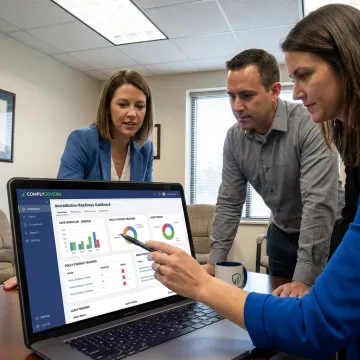
ComplyGovern is built for continuous readiness rather than one-time survey preparation. Teams can maintain evidence repositories, monitor open findings, schedule reviews, map standards to controls, and use dashboards to track readiness status. This reduces the manual burden of preparing only when a survey or accreditation deadline is approaching.
Who should use PCAB Accreditation readiness software?
The platform is designed for healthcare organizations that need connected governance, compliance, accreditation, quality, risk, policy management, and executive visibility. For compounding pharmacies, it is especially useful when documentation is spread across shared drives, spreadsheets, emails, and departmental tools, making accreditation evidence difficult to manage consistently.