What is the role of data analytics in enterprise risk management?
Data analytics supports enterprise risk management by converting fragmented information into measurable insight. Instead of relying only on manual reports, organizations can use risk scoring, incident trends, corrective action status, compliance findings, and performance indicators to identify exposure earlier. ComplyGovern connects these data points through dashboards and workflows so leaders can prioritize mitigation based on evidence.
How does data analytics improve healthcare risk management?
Healthcare organizations can use analytics to monitor clinical, operational, regulatory, cybersecurity, financial, strategic, and enterprise risks in one environment. ComplyGovern’s configurable risk registers, scoring models, mitigation plans, and trend analysis help risk teams see where risk is increasing, which controls are working, and where executive attention is required.
What data should be tracked for enterprise risk management?
Effective ERM analytics typically include risk scores, likelihood and impact ratings, open mitigation plans, incident trends, corrective action effectiveness, regulatory gaps, audit findings, quality performance measures, and cybersecurity exposure. ComplyGovern also connects these indicators to policies, evidence, accreditation readiness, executive dashboards, and board reporting for a more complete governance picture.
Can data analytics help predict organizational risk?
Yes. Predictive analytics can highlight patterns that suggest emerging risk, such as repeated incidents, delayed corrective actions, declining performance measures, or recurring compliance gaps. While no system can eliminate uncertainty, ComplyGovern helps organizations use trend analysis and connected governance data to detect risk earlier and respond before issues become larger events.
Why are executive dashboards important in ERM?
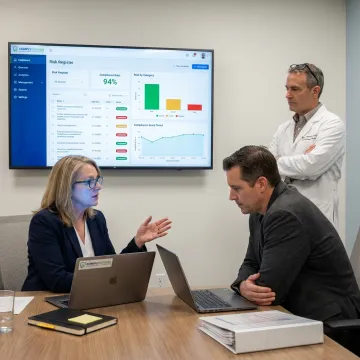
Dashboards are essential because executives and boards need concise, current visibility rather than disconnected spreadsheets or delayed reports. ComplyGovern provides role-specific dashboards showing enterprise risk, compliance status, corrective actions, quality performance, open findings, accreditation readiness, and strategic objectives. This helps leaders focus on the decisions they own without hunting for key numbers.
How does risk scoring work in enterprise risk management?
Risk scoring gives organizations a structured way to compare and prioritize risks. ComplyGovern supports configurable scoring models that evaluate factors such as likelihood, impact, category, mitigation status, and trends over time. This helps teams move from subjective discussions to evidence-based prioritization, ensuring high-exposure risks receive attention, ownership, and documented mitigation plans.
How do corrective actions connect to risk analytics?
Corrective actions show whether identified risks are being addressed effectively. ComplyGovern connects incidents, findings, root cause analysis, mitigation plans, effectiveness tracking, lessons learned, and executive reporting. This closes the loop between risk identification and risk reduction, helping organizations document accountability and demonstrate progress to leadership, boards, auditors, and surveyors.
Can ComplyGovern integrate with existing healthcare systems?
ComplyGovern integrates with leading healthcare and enterprise platforms, including Epic, Oracle Health Cerner, MEDITECH, athenahealth, HL7, FHIR, Microsoft 365, and SharePoint. These integrations support smoother data exchange across governance, compliance, quality, risk, and operational workflows while preserving a centralized system of record for analytics and executive visibility.